Priorities of autistic people

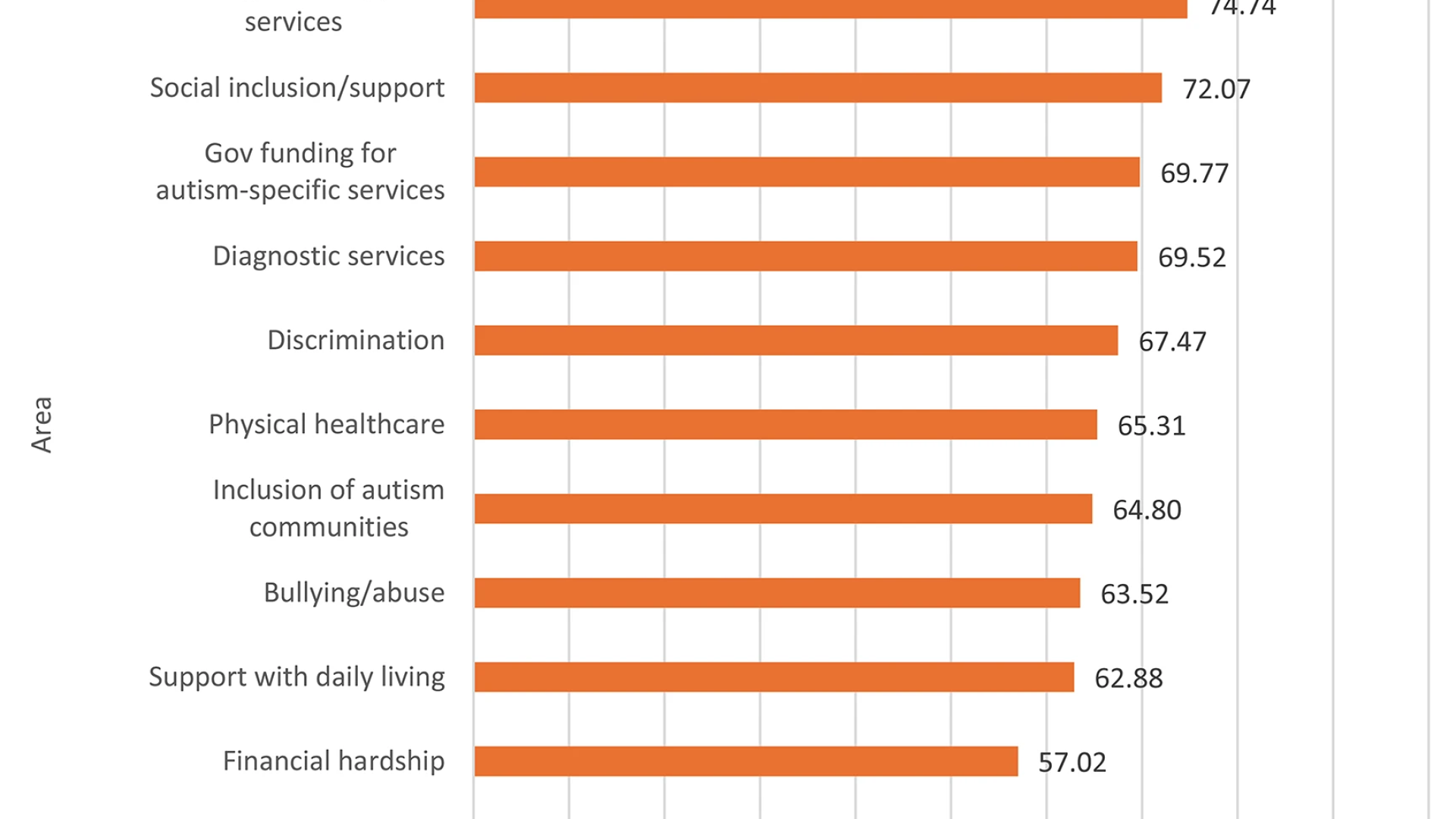
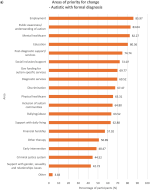
A recent study researched 784 diagnosed autistic people about their priorities for change in society.

Binte Mohd Ikhsan, S., Holt, R., Ruigrok, A. et al. Priorities for change for autistic people across Europe. Molecular Autism 17, 12 (2026). https://doi.org/10.1186/s13229-026-00706-3


1772893490689.png
Reference#
 

Results​

Across groups, areas that require the most urgent changes are education, public awareness and understanding of autism, employment, and government funding for autism-specific services. Differences in results between groups reflect their specific needs and experiences. Discrimination is a crucial area for change according to autistic people with formal diagnosis of autism, whereas autistic people without formal diagnosis indicate diagnostic services as a priority for change. According to parents/carers and members of autism-related organisations, changes are also needed to improve social inclusion of autistic people. Other areas of priority for change across all groups include mental healthcare (within top 10 for autistic participants and parents/carers), support with daily living, and post-diagnostic services (the latter two within top 10 for parents/carers and members of autism-related organisations). For some areas, their identification and importance as priorities for change significantly varied with whether participants were autistic or formally diagnosed and autistic participants’ gender. Comparisons across countries with the greatest representation in the survey – Germany, the UK, France, Spain and Poland – revealed consistent priorities.
 
For selection of priorities for change, results were presented as the percentage of participants selecting an area as a priority for change. The percentages were calculated across the whole sample as well as within each of the four participants groups and the five countries with the most participants in the sample – Germany, the UK, France, Spain and Poland. Overall ranking of the areas as priorities for change as well as the mean rank for each area, which is the average of the ranks assigned to an area by participants, were also derived within each of these samples. The overall rankings did not include ‘Other’ area and thus ranged from 1 to 18 as the option to rank it was only available to a small group of participants who had indicated it earlier as a priority for change. Mean ranks were calculated across all participants, regardless of whether they had ranked ‘Other’ area or not, so the maximum mean rank an area could be assigned to is 19.